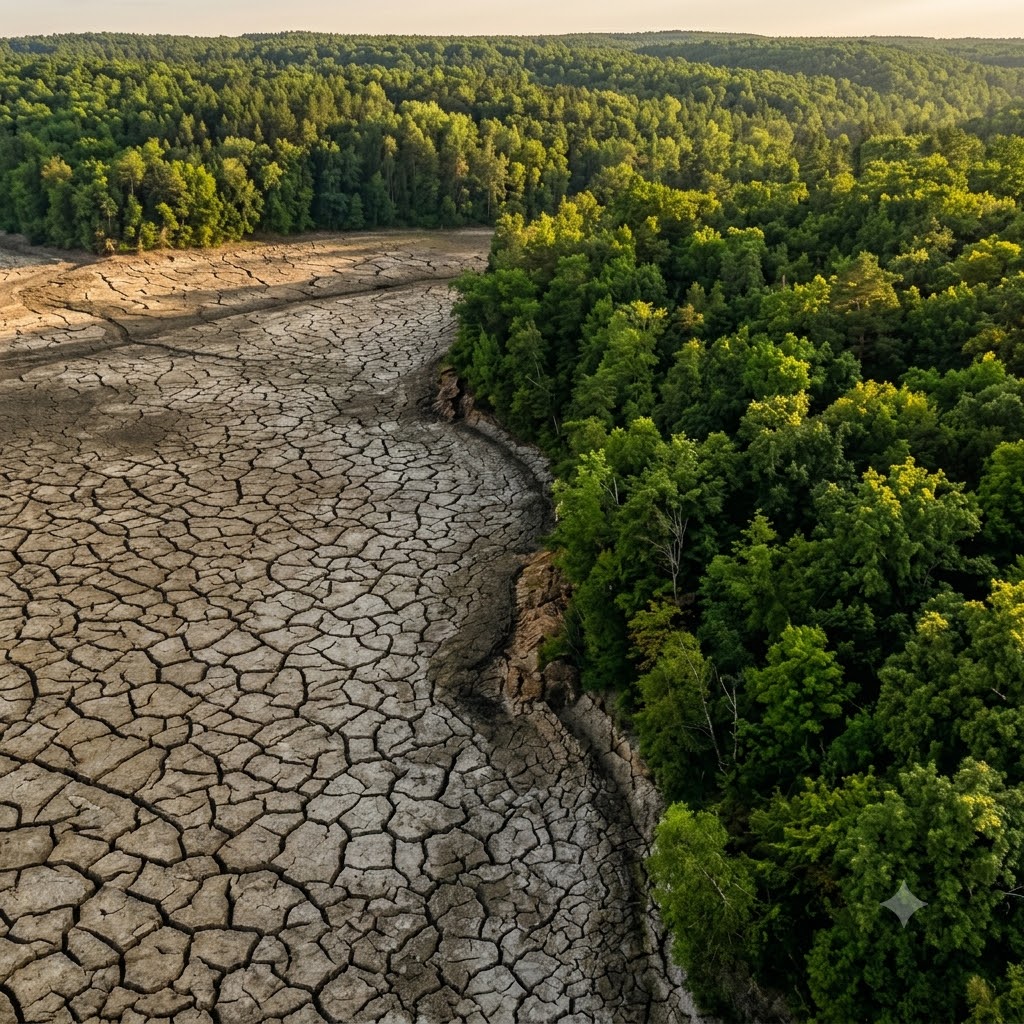
On 6 June Turkey used up a year's worth of natural resources. Overshoot Day is really a story about debt: we meet today's needs by borrowing from the future, with no repayment plan. In legal terms that is an impossible contract, where one party keeps taking and the other is not yet at the table.
On June 6, Turkey used up all the natural resources it would need for an entire year. From today, we are drawing on resources that belong to 2027.
This date is called the Country Overshoot Day. Global Footprint Network calculates it separately for every country each year. Qatar's date is February 4. Luxembourg's is February 17. The United States reaches it on March 14. Turkey on June 6.
This figure tells me something every year. But this year, I found myself thinking about it differently.
A Question of Debt
The Overshoot Day is essentially a debt story. We are meeting today's needs by borrowing from the future. We know we are borrowing. But we have no repayment plan.
In legal terms, we might call this an impossible contract. One party takes continuously; the other is not even at the table yet. Future generations did not sign this contract. But they will pay for it.
The UN report published this year, Counting What Counts, makes this gap visible. One of its most powerful arguments is this: measuring progress only by today's production and consumption is not enough. The wellbeing of future generations must also be taken into account.
June 6 makes that calculation concrete.
The Disputes Have Already Begun
The environmental crisis is no longer an abstract future threat. It has already moved into court files, investor demands and corporate accountability processes.
Disputes over water rights. Compensation claims arising from the destruction of agricultural land. ESG allegations against companies that have failed to meet their carbon commitments. Greenwashing complaints. These are all real disputes, and they are growing every year.
Turkey is not outside this picture. Water scarcity, declining agricultural productivity, the environmental impacts of infrastructure projects; these will continue generating disputes both today and over the decades ahead.
Justice Without Dialogue Is Not Enough
Environmental disputes have a particular complexity. The parties are rarely just two; they include companies, local communities, government institutions, future generations and nature itself.
Courts struggle to manage this multi-layered structure. A court can issue a ruling. But it cannot repair a relationship. It cannot ensure long-term compliance. And it cannot hear the voices of those who cannot come to the table, the generations not yet born.
This is why restorative justice and dialogue-based resolution methods are becoming increasingly critical in environmental disputes. Green ADR exists precisely to fill this gap.
What Overshoot Day Is Telling Us
June 6 is not an accusation. It is a measurement.
But measurement shows us what we value. If we cannot move this date forward year after year, it means we are either not measuring the right things or not valuing them enough.
Environmental problems are no longer purely technical matters. They are becoming questions of justice, accountability and obligation toward future generations. And these questions demand resolution: in courtrooms, at negotiating tables, through dialogue processes.
Justice for the planet also begins at a table.
References
Global Footprint Network. (2026). Earth Overshoot Day 2026. overshootday.org.
UN High-Level Expert Group on Beyond GDP. (2026). Counting What Counts: A Compass of Progress for People and Planet. un.org.
Changaroth, A. & Rahman, L. (2026). Restorative Justice for Climate Conflicts: Rethinking the Future of Appropriate Dispute Resolution. Commonwealth Lawyers Association.