The opening of a mediation center might not, on its own, be major news. But when that center is established within a country's Supreme Court, it is worth a closer look.On 18 August, the Supreme Court of Pakistan opened the country's first Supreme Court Court-Annexed Mediation Centre.The centre was…
The opening of a mediation center might not, on its own, be major news. But when that center is established within a country's Supreme Court, it is worth a closer look.
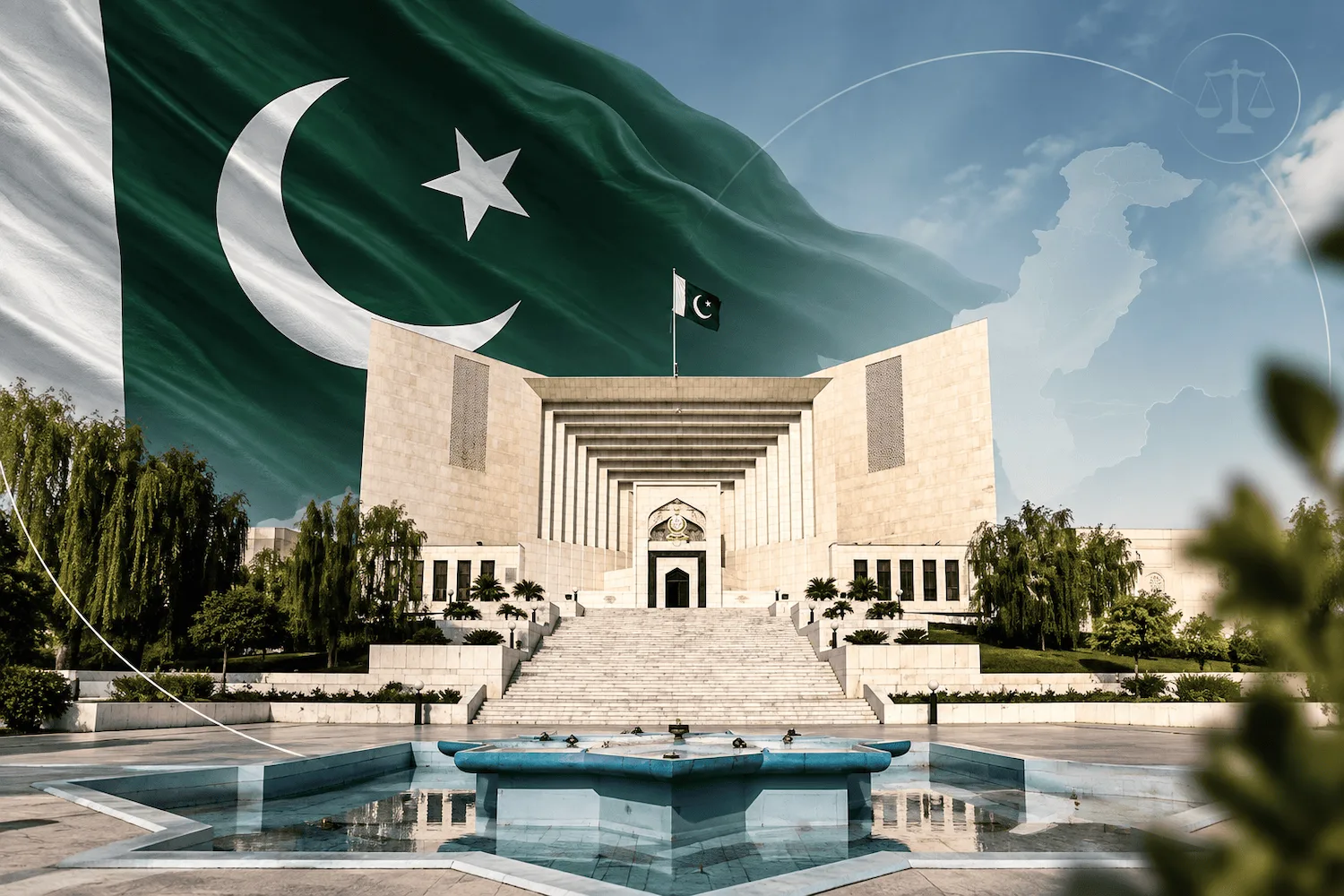
On 18 August, the Supreme Court of Pakistan opened the country's first Supreme Court Court-Annexed Mediation Centre.
The centre was established under the EU-funded Deliver Justice Project, in cooperation with UNDP. The aim is to build a structured, court-supported system through which suitable disputes can be referred by the court to mediation.
To me, what matters most about this development isn't the centre itself, but the shift in where mediation sits within the judicial system.
For a long time, in many legal systems, mediation was seen as an alternative method standing outside litigation. Court-annexed models produce a different structure. Court and mediation are not positioned as two competing options. Instead, the judicial system gains a broader process design over which disputes should end in a judgment and which are better suited to the parties producing their own resolution.
That is what makes the Pakistan development interesting.
Building an Institutional Mediation System
The new centre is being run by the Legal Aid Society, together with the Musaliha International Center for Arbitration & Dispute Resolution (MICADR), which it established.
Under the protocol signed between the Supreme Court and the Legal Aid Society, LAS will manage the files referred by the court and develop case management systems and standard operating procedures; in addition, 24 Supreme Court officials will receive mediation training to IMI standards through MICADR. The goal is for a functioning system to eventually be handed over to the Supreme Court.
These details matter. Because institutionalizing mediation is not achieved simply by adding a clause to legislation that says “mediation may be conducted.”
How will files be referred?
Which disputes will be considered suitable for mediation?
To what standards will mediators be trained?
How will the process between the court, the mediator and the parties work?
How will outcomes be monitored?
How will confidentiality be protected?
The answers to these questions determine whether a system is sustainable.
Institutionalization Starts With Education
Another dimension of the Pakistan example is legal education.
In the country's renewed four-year law degree curriculum, dated 2025, Alternative Dispute Resolution is one of the mandatory subject areas. The Directorate of Legal Education of the Pakistan Bar Council, together with the Legal Aid Society, also ran a separate ADR certification programme for law students in May 2026.
Seen this way, an interconnected structure emerges:
Legal education, practitioner training, court referral, institutional mediation, and a centre established within the Supreme Court.
This, I think, is exactly where institutionalization begins.
What determines a method's place within a legal system is not how many times it is used, but whether the institutions, rules and professional capacity that support it develop together.
A New Relationship Between Courts and Mediation
The importance of court-annexed mediation models doesn't come only from their potential to reduce caseloads.
There is a more fundamental question:
Does every dispute necessarily need to end in a judgment?
In some disputes, of course it does. Where a legal precedent needs to be set, where a matter of public concern needs to be decided, or where one of the parties needs to be protected, a judicial decision is indispensable.
But in disputes where the parties' commercial, family or institutional relationship continues, the need can be different. Here, the court's role can be understood not only as the body issuing the final decision, but also as part of a system that ensures the right file reaches the right resolution method.
This is the core issue the Pakistan development makes me reflect on.
Rather than measuring mediation's success by whether it becomes an alternative to the courts, it may be more meaningful to assess it by the judicial system's capacity to direct the right dispute to the right process.
A court-annexed mediation centre established at the level of a country's Supreme Court should not, for this reason, be read merely as the opening of a new centre.
What should really be tracked, ahead of how many files will be referred or how many will end in settlement, is whether this model develops into a lasting and trusted dispute resolution mechanism in Pakistan.
Because the institutionalization of mediation is not completed on the day a centre opens.
It begins when that centre becomes a functioning part of the legal system.
Sources
Government of Pakistan, announcement of the opening of the Supreme Court Court-Annexed Mediation Centre, 18 August 2026.
UNDP Pakistan, “Supreme Court of Pakistan inaugurates its first Court-Annexed Mediation Centre,” 18 August 2026.
Legal Aid Society, announcement of cooperation on the Supreme Court Court-Annexed Mediation Centre.
Pakistan Bar Council, Directorate of Legal Education, “ADR Certification Course for Law Students,” 12 May 2026.