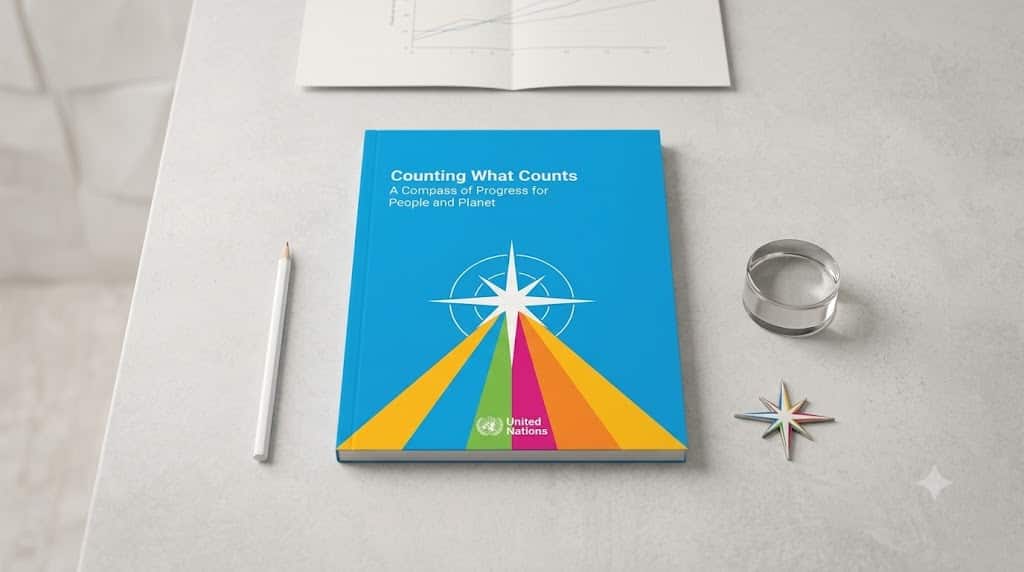
The UN published its first global roadmap for moving beyond GDP: a panel of 31 indicators. Its strongest sentence applies to mediation too. In Turkey we measure settlement rates, but not how the parties experienced the process, or whether the agreement is still standing six months later.
The UN published an important report this month. The first global roadmap for moving beyond GDP. A panel of 31 indicators. Wellbeing, equality, institutional trust, peace.
The report's most powerful sentence is this: “What we measure shapes what we value.”
When I read that sentence, I thought of mediation. Immediately.
What Do We Measure in Mediation?
Mediation statistics in Turkey look strong. Settlement rates have reached fifty four percent. Case numbers are rising. Court backlog is dropping.
These matter. But they are incomplete.
Here is what we do not measure. How did the parties experience the process? Did they feel heard when they left the table? Is the settlement still holding six months later? Where did the relationship between them go?
And most importantly: how much did the trust built at that table contribute to institutional trust?
The Difference Between Growth and Progress
The UN report's core thesis is this: the economy can grow while people feel left behind. As GDP rises, security can worsen, the environment can deteriorate, social bonds can unravel.
A similar risk exists in mediation.
Case numbers can rise while parties experience the process as a formality. Settlements can be signed while nothing is truly resolved. The statistics can look good while cultural adoption never arrives.
Greece is the clearest example of this. Strong legislation, low uptake. The system was built. The culture never came.
Measurement Is a Choice About Value
This is something I have observed at the table for years: there is a deep difference between a dispute ending in settlement and a dispute actually being resolved.
A settlement is a signature. A resolution is the parties carrying something different away from that table. Perhaps understanding. Perhaps trust. Perhaps the will to sustain the relationship.
We do not measure this second thing. Because it is hard to measure. But because we do not measure it, we do not value it enough.
The UN report defines this problem at a global scale. GDP is easy to measure. Wellbeing, trust, and sustainability are hard to measure. When we choose not to measure them because they are hard, we end up disregarding them.
What Needs to Change?
We need to rethink what we measure in the field of mediation.
We should add party satisfaction alongside settlement rates. The sustainability of settlements alongside case numbers. Where the relationship goes alongside speed metrics.
This is necessary both for the field to mature and to show policymakers the real value of ADR.
What we measure shapes what we value. The same holds true in mediation.