Beyond the competition: ICC Mediation Week as a global learning ground
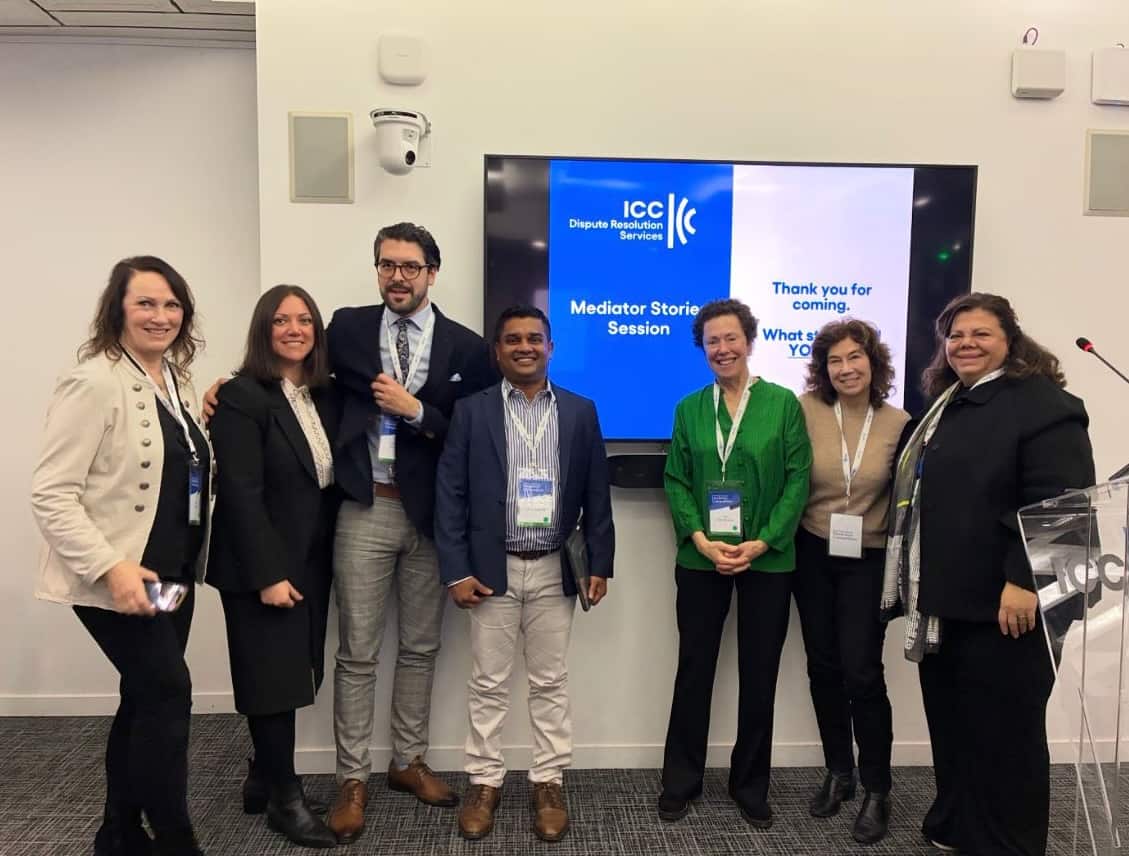
The 21st ICC International Commercial Mediation Competition, held this year in Paris, offered far more than just a competitive arena where young participants showcased their advocacy and negotiation skills. It served as a dynamic international platform where the universal values of mediation were brought to life. Once again, being part of this process and witnessing how participants from different legal cultures developed a shared language of resolution was a truly enriching professional experience.
In the sessions where I served as a jury member, I had the opportunity to closely observe how teams differentiated themselves through their problem-solving strategies, listening skills, and framing abilities. The University of Auckland team, which ultimately took first place, stood out not only for their technical competence but also for their commitment to building meaningful dialogue. Yet what left the deepest impression was the collective care and eagerness to learn demonstrated by all participants.
In a world becoming increasingly digital, it is inspiring to see how strongly young legal minds continue to invest in communication-based competencies. This is a promising indicator for the future of mediation.
The Universal Language of Mediation and the Perspective of the New Generation
One of the most striking takeaways I observed once again this year in Paris was that mediation is not just a method—it is a universal language of communication. Young legal professionals and students from various academic backgrounds and legal systems displayed a remarkable ability to step beyond their local reflexes and build common ground.
The sessions I assessed as a jury member did not only provide an opportunity to evaluate technical proficiency but also allowed me to observe how young mediators approach conflict, what competencies they prioritize, and how they balance their cultural backgrounds with a universal problem-solving language.
The University of Auckland team’s ability to integrate analytical thinking, process management, and negotiation techniques through a comprehensive approach was one of the key factors that brought them to the top. But beyond the results, the overall level of preparation, collective effort, and intellectual curiosity displayed by all teams clearly demonstrated how the next generation is already shaping the future of this field.
At a time when artificial intelligence is entering the legal sphere at an unprecedented pace and digitalization is transforming processes, this strong investment in human-centered skills—listening, empathy, collaboration, and constructive dialogue—is not only encouraging, but essential.
The True Value of International Mediation Competitions
International competitions are not merely platforms for students to gain prestige; they offer a collective learning space that plays a vital role in shaping the future of the profession. These events are not just about finding the “best solution,” but also about how participants manage the process, build rapport with counterparts, and align their strategy with ethical intentions.
Once again in Paris, we saw that representation, active listening, systems thinking, process literacy, and the ability to engage in meaningful dialogue are foundational to contemporary mediation. These competitions act as real-life laboratories—not only fostering individual growth but also propelling the evolution of the field itself.
The Success of the Marmara University Mediation Team
One of the most meaningful highlights this year was the recognition of a team from Turkey on this global stage. The Marmara University Mediation Team was awarded for “Relationship Building with the Other Team,” an accolade that reflects not just a technical achievement, but a distinctive approach.
This category honors the ability to build trust, establish empathy, and engage constructively with the opposing side. That the team was recognized in this area is a strong indication of the growing quality of mediation education and culture in Turkey—and a testament to the global relevance of our young talents.
Encouraging more universities from Turkey to participate in such forums is not just an opportunity for students. It is a strategic move for developing the country’s broader approach to mediation. These future professionals are not merely competing; they are discovering pluralistic, intercultural pathways to resolution.