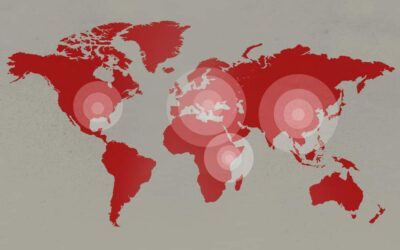
Global governance is no longer shaped solely by states but increasingly by the collective efforts of multi-actor structures. In areas such as climate, migration, digital transformation, and justice, achieving impactful results requires not only technical solutions but also strong relationships and sustainable partnerships.
For this reason, the United Nations’ 17th Sustainable Development Goal, “Partnerships for the Goals,” is becoming more vital than ever. At such a pivotal time, the United States’ announcement of its withdrawal from 66 international organizations is not merely a political decision. It signals the beginning of a new era—one that challenges the foundations of partnership and trust-based international networks.
A critical question stands before us:
As partnerships unravel, how will a culture of collaboration endure?
On January 8, 2026, the White House announced a decree confirming the U.S. withdrawal from 66 international organizations, 31 of which are affiliated with the United Nations. The justification was that these institutions “no longer serve American interests.”
This move is not an isolated act, but rather the latest link in a broader and systematic withdrawal strategy. Since the start of Trump’s second presidential term, the U.S. has suspended or terminated its engagement with several key structures—from the Paris Climate Agreement and UNESCO to the UN Human Rights Council and the World Health Organization. Now, this sweeping disengagement from 66 organizations expands the scope of this approach.
This is more than a shift in diplomatic posture. The decision directly contradicts the UN’s 17th Sustainable Development Goal: “Partnerships for the Goals.” It also threatens the sustainability of international cooperation. The organizations on the withdrawal list are far from symbolic—they are institutions capable of producing concrete solutions and fostering multi-stakeholder dialogue on urgent global challenges such as climate change, migration, development, maritime security, and social inequality.
Therefore, this development must be evaluated not just through the lens of U.S. foreign policy, but as a turning point for the future of global collaboration. What’s at stake is not only what the United States has done, but how the global culture of cooperation will be redefined.
This is no longer simply a matter of “withdrawal”—it reflects a new paradigm that targets the foundational idea of cooperation itself. This new paradigm moves beyond a state-centric foreign policy model and introduces a critical question: in the emerging gaps across international law, cross-system mediation, and multilateral dialogue, what kind of collective problem-solving mindset and practices will step in to fill the void?
Risks Emerging for Global Cooperation
This U.S. decision cannot be viewed as merely a foreign policy preference. Withdrawing from international institutions signals the weakening of a shared responsibility framework in addressing global challenges. In fields like climate, forced migration, pandemics, and digital transformation, no state can realistically act alone.
Such disengagements erode not only the financial capacities of multilateral institutions but also their function of generating trust. When shared tables dissolve, problems do not resolve faster. On the contrary, uncertainty grows, coordination weakens, and the gap between actors widens.
The weakening of global cooperation mechanisms triggers chain reactions, especially in fragile areas. As institutional dialogue channels narrow, crises escalate more quickly, and constructive communication becomes harder. This creates risks that impact not only states but also international organizations, the private sector, and civil society directly.
At this point, the key question is not which states are leaving the table. It is how the table itself will be preserved, and how the capacity for joint problem-solving will be upheld.
What Might Come Next?
The U.S. withdrawal marks not only a retrospective shift but also indicates several forward-looking trends on the international stage. As multilateral structures weaken, national agendas become more dominant. This change creates a new need for alignment—not only at the institutional level but also within professional practices.
Three key developments may emerge in the coming period:
1. Search for New Alliances
The void left by the U.S. will likely be filled by other actors. China, the European Union, and regional alliances may step into more visible and directive roles within these institutions.
2. Institutional Stress Test
Many international organizations will face challenges in terms of legitimacy and funding, as political support diminishes. This could compel the formation of new partnership models.
3. New Roles for Law and Mediation
As states pull back from traditional diplomacy, preventive legal frameworks, mediation, and multi-actor governance tools may take on increased importance. Trust-building between parties will need to be carried out through more flexible mechanisms involving non-state actors.
In this new era, it is not only diplomats who will bear responsibility. Legal professionals, mediators, and governance experts will also play a critical role in preserving multilateral processes.
Today, the key strategic question is no longer just who remains at the table,
but how that table will be rebuilt.